
Iberia Disney Adventure Livery: Aircraft Graphics in Five Days
A Special Livery, Delivered Under Operational Deadlines
Special liveries often capture attention because of their visual impact, but behind every successful aircraft branding programme is a carefully managed manufacturing process. Airlines operate within tightly planned maintenance schedules, installation windows, and return to service deadlines, leaving little room for delays once production begins. A recent project for Iberia, developed in collaboration with The Walt Disney Company, is a good example of how engineering-led manufacturing supports these operational requirements.
Featuring artwork inspired by Disney Adventure and Frozen, the programme required the complete manufacture of certified aircraft decals within just five days. The finished products were released with EASA Form 1, allowing the installation programme to proceed according to schedule. While the aircraft immediately stands out because of its design, the project demonstrates something equally important: successful aircraft liveries rely on engineering, controlled manufacturing, and production discipline long before the first graphic is installed.
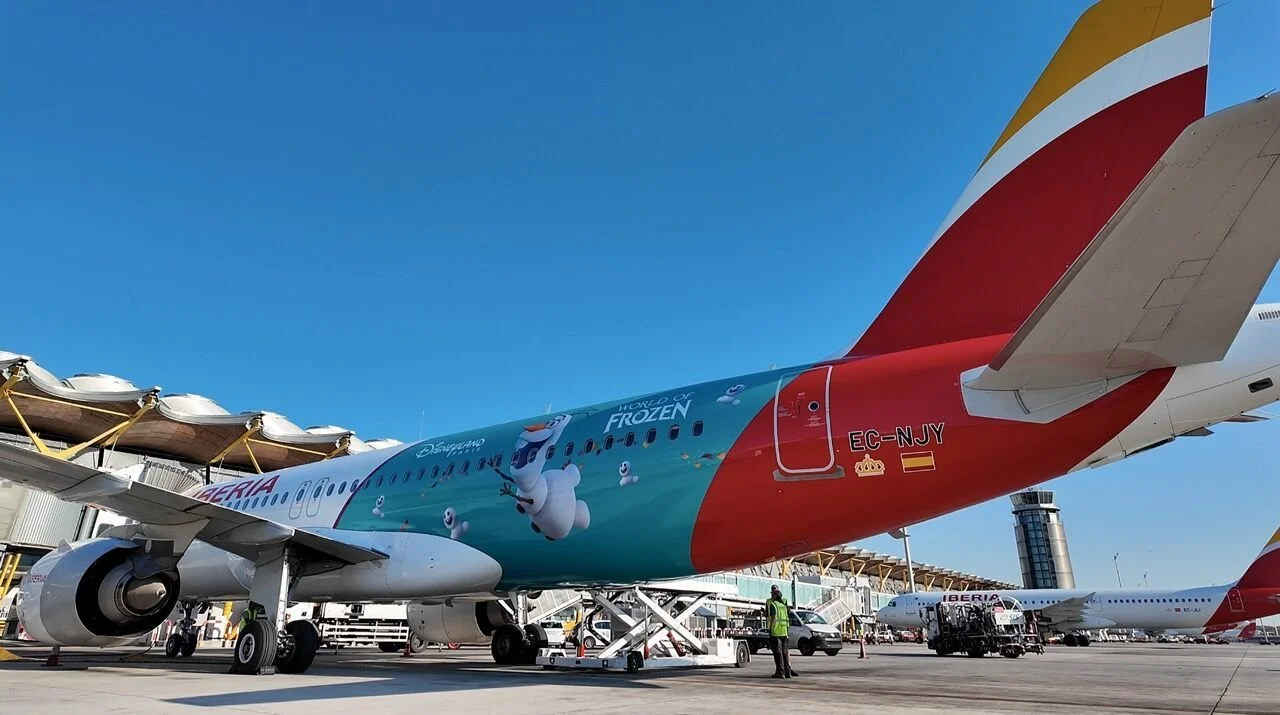
Every Livery Begins with Engineering
Large scale aircraft graphics projects rarely begin on the production floor. They begin with engineering review, configuration verification, approved documentation, and production planning. Every aircraft decal, aircraft placard, and graphic element must correspond with the aircraft's approved configuration, installation references, and dimensional requirements.
Material selection is equally important, as different aircraft surfaces require materials capable of performing under demanding operational environments including UV exposure, temperature variation, cleaning chemicals, and daily airline operations. Engineering first approach of LogoSky reduces uncertainty during manufacturing while helping ensure that every product delivered matches the approved aircraft data. Whether manufacturing aircraft exterior placards, operational markings, or complete promotional liveries, production starts with technical preparation rather than production speed.
Delivering a Complete Aviation Graphic in Five Days
Completing the Disney Adventure Livery manufacturing programme within five days required coordinated planning across every stage of production. Short lead times cannot be achieved simply by increasing manufacturing capacity. They depend on structured workflows, repeatable production processes, engineering coordination, and clear communication between everyone involved in the programme.
Rather than treating each graphic as an individual product, the project was managed as a complete aircraft graphics programme. Production sequencing, material preparation, engineering review, manufacturing, inspection, and release activities were aligned to support the planned installation schedule without compromising process control or production conformity. This type of coordination, as implemented by LogoSky, becomes increasingly valuable for airlines operating promotional liveries, fleet branding campaigns, or aircraft entering service within fixed maintenance Windows
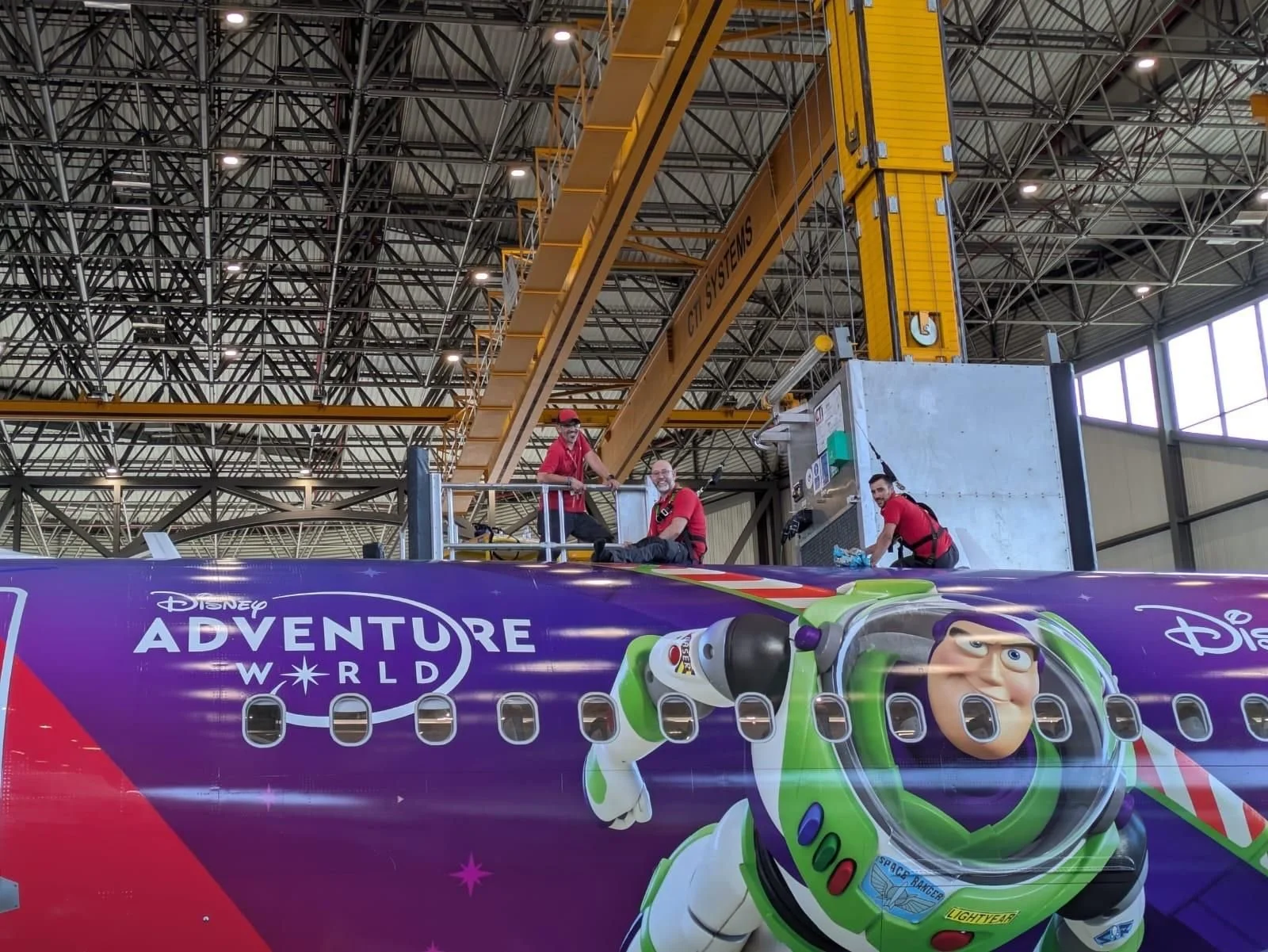
Controlled Manufacturing Supports Reliable Fleet Operations
Modern aviation manufacturing places significant emphasis on process control, repeatability, and traceability. The latest EASA Part 21 developments continue to reinforce these principles across approved production organisations, particularly where products form part of an aircraft's approved configuration. For manufacturers of aircraft decals and placards, controlled manufacturing means that every production stage is supported by documented engineering review, approved material selection, configuration management, manufacturing records, and conformity verification.
These production disciplines provide practical operational benefits. During scheduled maintenance, aircraft modifications, or future graphic replacements, operators can identify the correct product configuration more efficiently, helping reduce unnecessary engineering effort while maintaining fleet standardisation across multiple aircraft. The value of traceability is therefore measured not only by regulatory compliance but also by how effectively it supports maintenance planning throughout the aircraft's operational life.
Why EASA Form 1 Matters
The completed Iberia Disney Adventure Livery programme was released with EASA Form 1, confirming that the manufactured products were produced within an approved production organisation and released in accordance with applicable regulatory requirements. For airlines, MRO organisations, and leasing companies, this provides confidence that certified aerospace decals, placards, aircraft, and other aviation graphics have been manufactured within a controlled production environment supported by documented manufacturing processes and engineering oversight.
EASA Form 1 is often viewed simply as a release document, but it represents something much broader. Behind every released product is a structured manufacturing system built on configuration management, material traceability, engineering review, production discipline, and conformity verification. These processes become particularly important when programmes must be completed within compressed delivery schedules while maintaining consistent manufacturing standards.
More Than an Aircraft Livery
Although this programme is recognised primarily for its collaboration between The Walt Disney Company and Iberia, projects of this nature typically involve much more than exterior artwork alone. A complete aircraft graphics programme may include aircraft placards and markings, identification products, operational graphics, and aircraft exterior placards that must integrate seamlessly with the aircraft configuration.
Managing these products within a single controlled manufacturing programme simplifies installation while supporting future maintenance and replacement activities. For airlines operating multiple promotional aircraft or expanding fleet branding initiatives, this integrated approach helps maintain consistency throughout the fleet while reducing complexity during future configuration updates.
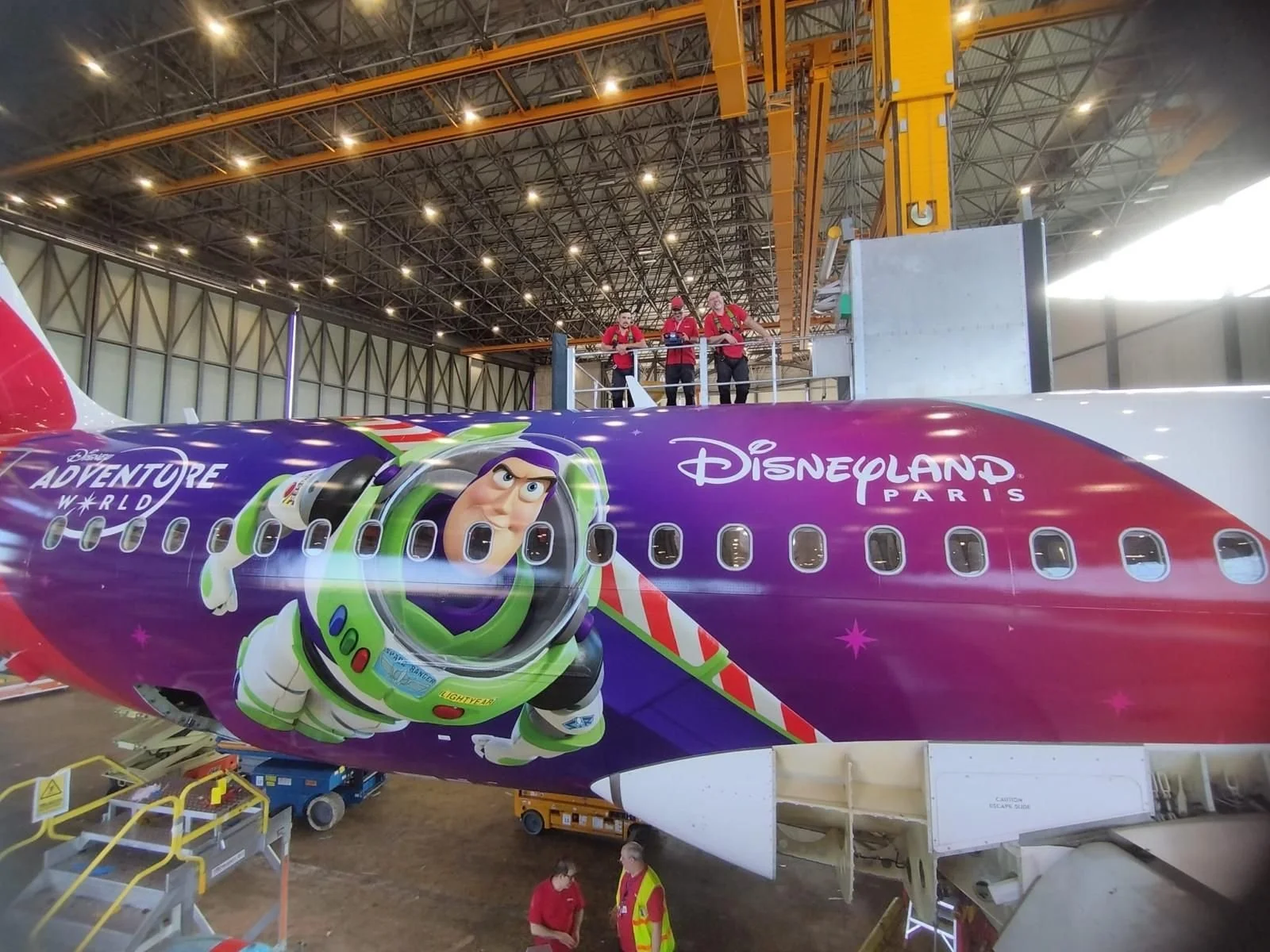
Engineering-Led Manufacturing Behind Every Programme
Operating as an EASA Part 21G Approved Manufacturer means manufacturing aviation graphics within a production system where engineering decisions, controlled manufacturing, and documented processes work together from the beginning of every programme.
Engineering review, material selection, production planning, configuration management, traceability, and conformity verification are not separate activities added at the end of manufacturing. They form the foundation that allows complex aviation graphics programmes to move efficiently from approved data to final installation.
This engineering-led approach also supports collaboration with design organisations, operators, and installation teams throughout the programme. Whether the project involves a complete jet livery, certified aircraft decals, aircraft placards, or exterior placard kits for aircraft, maintaining repeatable manufacturing processes helps ensure that every product corresponds with approved aircraft data while supporting reliable installation worldwide.
A Case Study in Modern Aviation Graphics Manufacturing
The Iberia Disney Adventure Livery demonstrates that successful aircraft branding programmes depend on much more than creative design. Completing a certified aviation graphics programme within five days required structured engineering, controlled manufacturing, disciplined production planning, and continuous configuration management from the initial engineering review through to final release.
As an EASA Part 21G Approved Manufacturer, LogoSky managed the programme through engineering-led production principles, combining configuration management, material traceability, production planning, and controlled manufacturing into a single coordinated workflow. This integrated approach enabled the project to meet an exceptionally short delivery schedule while maintaining full production conformity and supporting installation readiness.
Released with EASA Form 1, the programme demonstrates how engineering-led manufacturing supports airlines operating within demanding maintenance and branding schedules without compromising repeatability or traceability. As promotional liveries, fleet branding initiatives, and special aircraft programmes continue to grow across commercial aviation, the ability to manufacture certified aircraft decals and placards through disciplined production processes will remain essential to delivering reliable aviation graphics worldwide.