
MRO Guangzhou 2026
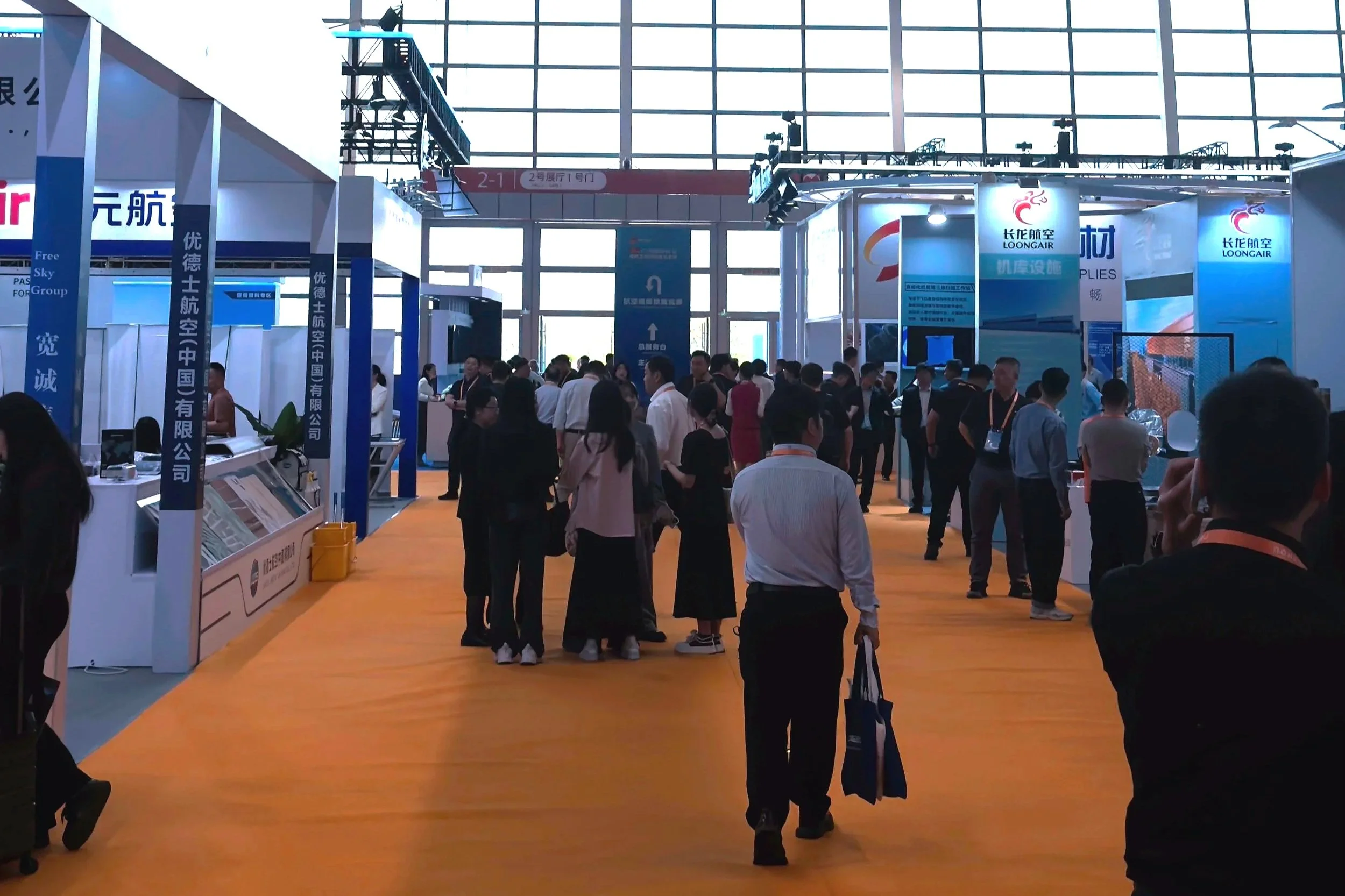
MRO Guangzhou 2026: Aircraft Placards and Decals in Operational Context LogoSky attended MRO Guangzhou 2026 as a visitor, focusing on direct engagement with operators and MRO organisations across the region. Even though the event had low footfall, the discussions were focused and technically grounded.
Meetings were typically tied to defined maintenance requirements rather than general supplier introductions. LogoSky is an aviation graphics manufacturer. Production is managed in-house under EASA Part 21G approval, with manufacturing and installation operating as a controlled system.
Event Observations: Focused Discussions Over Volume
MRO Guangzhou did not operate as a high volume exhibition. Visitor density was limited, but the structure allowed for direct and uninterrupted conversations. This resulted in more detailed exchanges, particularly with operators managing active fleets.
Discussions reflected ongoing maintenance needs rather than exploratory sourcing. Topics were specific: replacement cycles, missing or non-conforming markings, and alignment with approved data. In this context, aircraft placards and decals were treated as part of the production scope linked directly to maintenance execution.
Regional Activity: Maintenance Pressure and Fleet Utilisation
Operators across the region are managing high utilisation rates. This directly affects maintenance planning and material availability. Turnaround windows are compressed, and delays are often linked to missing or inconsistent manufactured parts.
A recurring focus was the availability of aircraft placards and markings at the maintenance stage. When these are not aligned with approved data or are not available on time, installation is delayed, and checks extend beyond planned windows. This is not treated as a minor issue; it directly affects aircraft return-to-service timelines.
Production Scope: Placards, Markings, Liveries and Decals
Across discussions, aircraft placards, aircraft exterior placards, aircraft liveries and aircraft decals were consistently treated as controlled production items. Interior placards remain safety-driven and instruction-based, while exterior markings are linked to identification, servicing, and regulatory compliance.
The distinction is operational. Placards and markings are not handled as generic supply items. They are manufactured parts that must be aligned with aircraft configuration, documentation, and installation conditions. Aerospace decals, including registrations and technical markings, are managed within the same framework. Their performance is evaluated not only in terms of print accuracy but also in terms of installation behaviour and environmental resistance.
Aircraft Liveries Within Maintenance and Production Scope
Although MRO Guangzhou is primarily maintenance-driven, aircraft liveries were still part of several technical discussions, particularly in relation to repaint cycles, partial updates, and fleet transitions. Unlike standalone visual projects, livery applications are treated as part of the production scope when aligned with maintenance events.
Timing is typically defined by scheduled checks, where surface preparation, repaint, and the reinstallation of aircraft placards and markings must be coordinated within the same window. This creates a direct link between livery execution and operational planning. Any misalignment between livery elements and required markings can affect compliance and delay aircraft release. For this reason, liveries are not isolated from other manufactured parts. They are integrated into the same controlled production and installation framework.
Discussions at MRO Guangzhou reflected this approach. Operators are not separating Aircraft liveries, aircraft decals, and aircraft exterior placards into different workflows. Instead, they are managing them as a combined system, where production, documentation, and installation must remain aligned. From a production perspective, this requires consistency across all exterior applications.
Surface compatibility, material behaviour, and installation sequencing must be managed together. The objective is not only visual outcome, but integration with maintenance execution and long-term performance.
Standardisation and Repeatability in Maintenance
A recurring topic at MRO Guangzhou was standardisation across fleets. Operators are prioritising repeatable installation outcomes, particularly where multiple aircraft types are involved. This directly relates to the use of exterior placard kits for aircraft, where configurations are defined in advance and aligned with approved data. The objective is not simplification alone, but installation consistency and traceability. When aircraft placards and decals are delivered as structured sets, installation becomes predictable. This reduces variation between aircraft and supports repeat maintenance
programmes. The impact is operational: fewer discrepancies, shorter installation time, and clearer verification.
Material Behaviour in Regional Conditions
Environmental conditions in the region directly affect marking performance. High humidity, temperature variation, and frequent cleaning cycles were consistently referenced during discussions. As a result, aircraft placards and decals are evaluated based on how they behave after installation. adhesive stability, substrate compatibility, and resistance to cleaning processes are treated as baseline requirements.
Material selection is therefore not isolated from production. It is aligned with the installation environment and the expected maintenance cycle. This ensures that manufactured parts remain compliant over time, not only at the point of delivery.
Integration with Maintenance Workflows
One consistent point across meetings was the integration of manufactured graphics into maintenance workflows. Aircraft placards and markings are expected to arrive ready for installation, aligned with documentation, and traceable within the production system. This affects how operators evaluate suppliers.
The focus is not on the product alone, but on how production integrates with maintenance execution. Availability, conformity, and installation consistency define the outcome. MRO Guangzhou 2026 provided a clear view of how aircraft graphics are positioned within active maintenance environments. The event was not defined by scale, but by the quality of technical discussions. Across all interactions, aircraft placards, aircraft placards and decals, and associated markings were treated as controlled elements within production and maintenance systems.
The emphasis was consistent: alignment with approved data, repeatability across fleets, and availability at the point of installation. In this context, the role of an aviation graphics manufacturer is not limited to supply. It is defined by how production supports maintenance execution.