
Logosky at AIX 2026: Aerospace Decals and Aircraft Placards
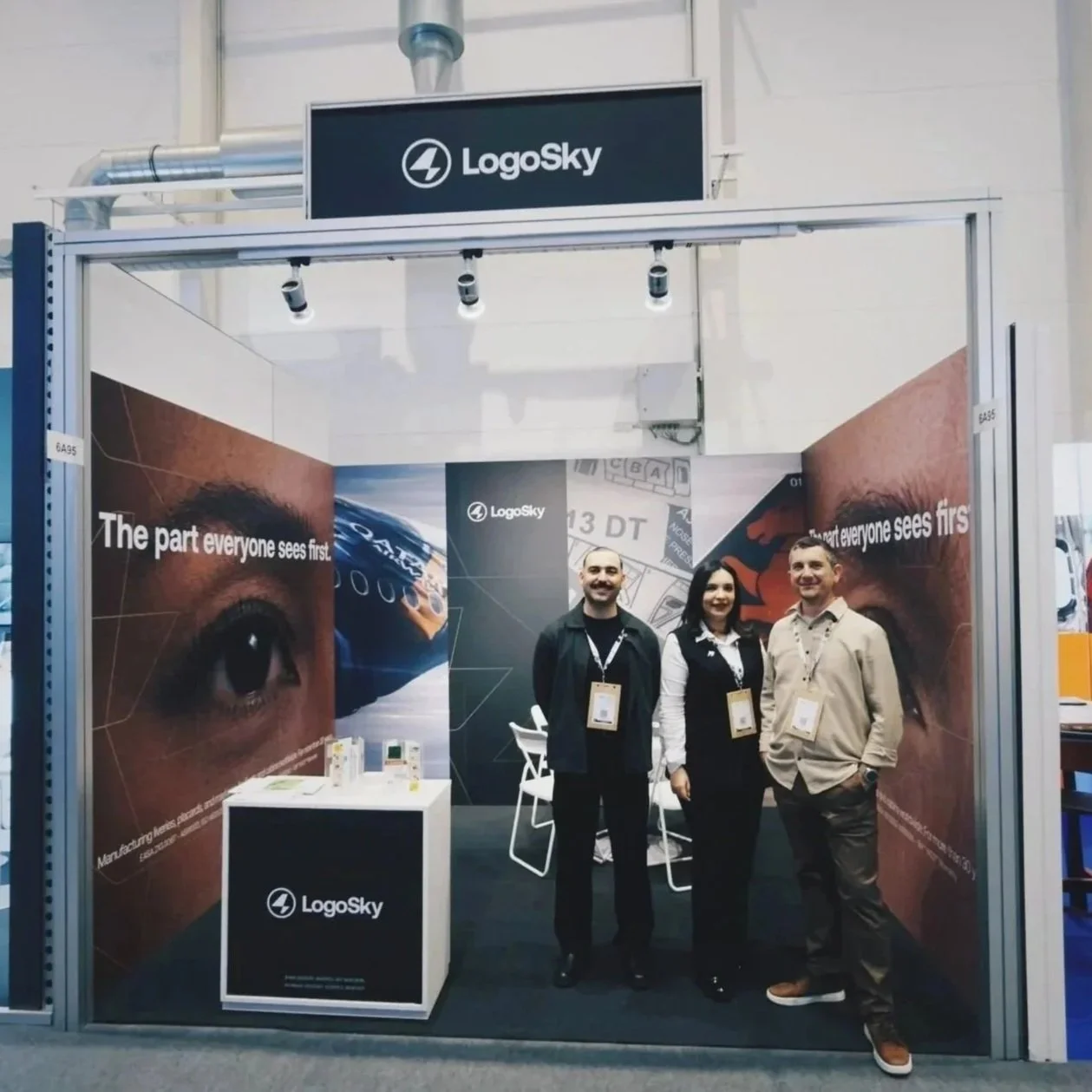
Aircraft Interiors Expo (AIX) 2026 once again served as one of the most important annual meeting points for the aircraft interiors sector, bringing together airlines, MRO organisations, OEMs, and specialist manufacturers involved in cabin programmes worldwide. Beyond showcasing cabin products, the event provides a working environment where operators and suppliers evaluate how interior programmes can be delivered more efficiently, maintained more reliably, and aligned more closely with operational requirements.
At AIX 2026, one of the clearest themes across industry discussions was the increasing importance of production control in cabin graphics. While cabin upgrades are often discussed in terms of passenger experience, the supporting graphics from aircraft placards to aerospace decals directly affect maintenance execution, configuration control, and regulatory compliance.
For operators, aircraft placards and markings are not simple additions. They are controlled production items that must align with approved data, installation requirements, and fleet maintenance schedules. As cabin programmes become more time sensitive, the ability to manufacture these items with repeatability and traceability is becoming a more important operational factor.
While AIX 2026 remained an important meeting point for the aircraft interiors sector, overall attendance was noticeably lower than in previous years. Industry-wide disruptions, including strike-related flight cancellations in Europe and ongoing instability affecting outbound travel from the Middle East, had a visible impact on visitor numbers.
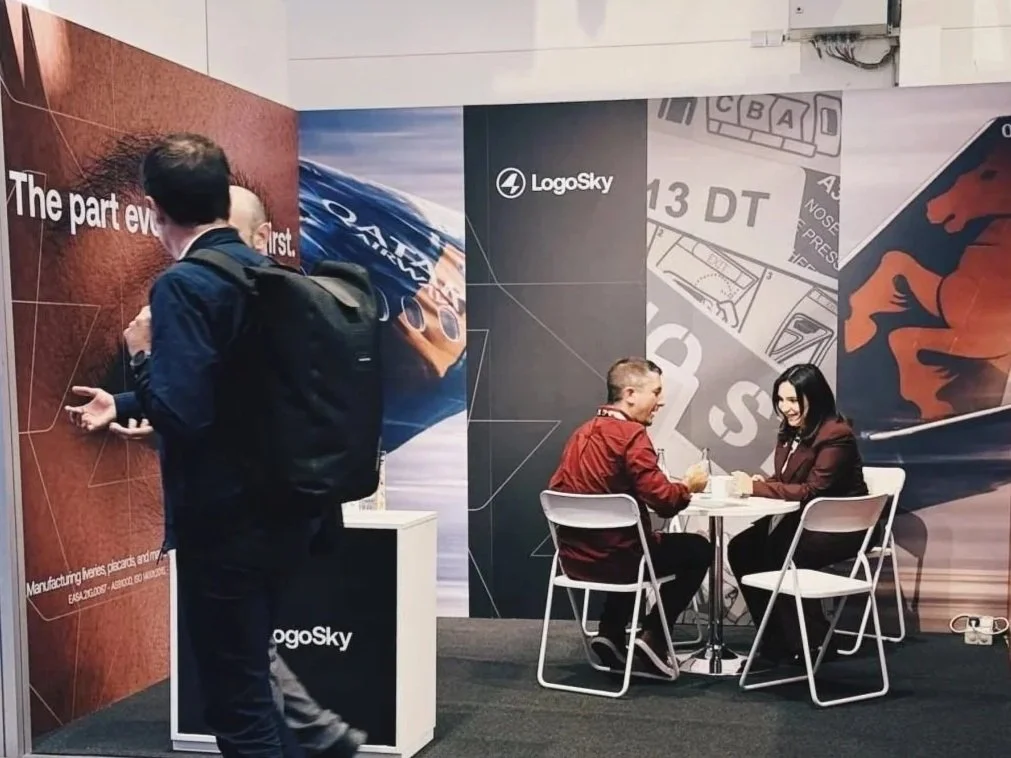
Even so, the value of the event was not defined by footfall alone. Discussions throughout the exhibition remained focused, and the quality of engagement was high. For LogoSky, AIX 2026 created meaningful opportunities to strengthen existing relationships and establish valuable new connections with operators and industry partners.
The value of AIX lies in these operational exchanges. For manufacturers and operators alike, the event offers direct visibility into the challenges affecting cabin modification programmes from lead time pressures to installation planning and compliance requirements. This year, discussions repeatedly showed that aircraft graphics are being treated less as finishing items and more as controlled production items that directly affect maintenance execution.

Aircraft Placards Are Part of the Maintenance Process
In day-to-day maintenance operations, placards are often treated as minor items until they delay an installation or prevent service release. Missing or non-compliant aircraft placards can interrupt maintenance workflows, especially during cabin retrofit or reconfiguration programmes.
This was a recurring topic at AIX 2026. Operators are increasingly treating aircraft placards and markings as part of the maintenance planning process rather than as last-minute procurement items. This shift reflects the operational reality that placards must be available at the maintenance stage, correctly manufactured, and aligned with the aircraft’s approved documentation.
The same applies to aircraft exterior placards, where accuracy in material, format, and positioning affects both compliance and installation efficiency. For operators managing multiple aircraft inputs, production repeatability is critical.
Aerospace Decals Must Be Managed as Controlled Production
The term "aerospace decals" often suggests a simple printed label, but in operational use, these items must perform as approved, manufactured parts. They must be produced consistently, traceable to production records, and suitable for installation within controlled maintenance environments.
At AIX 2026, discussions around aerospace decals reflected a stronger focus on production accountability. Operators are prioritising suppliers who can integrate decal production into maintenance schedules while maintaining traceability and conformity.
This applies not only to aircraft decals but also to exterior placard kits, registration markings, and cabin graphic packages that require consistent installation across repeat programmes. The operational value is not in the decal itself, but in how reliably that decal supports maintenance execution.
Why In House Manufacturing Matters for Aircraft Graphics
One of the strongest operational requirements discussed during AIX 2026 was the need for manufacturing control. For operators, outsourced or fragmented production creates risks in lead time, conformity, and repeatability.
That is why production managed in-house is increasingly important in the supply of aircraft placards, aircraft liveries, and aerospace decals. When manufacturing is controlled within an approved production organisation, lead times can be aligned with maintenance inputs, quality records remain traceable, and repeat orders can be produced consistently.
LogoSky is an aviation graphics manufacturer operating under EASA Part 21G approval, where the production of placards, decals, and aircraft markings is managed in-house as part of a controlled manufacturing system. This structure supports installation consistency, production repeatability, and alignment with operator maintenance requirements.
For operators, this means that aircraft placards and markings are delivered not as generic print items but as controlled manufactured parts integrated into the maintenance environment.
Why AIX 2026 Matters for Aircraft Graphics Production
For aviation graphics manufacturers, the relevance of AIX goes beyond exhibition presence. It is where production realities meet operator expectations. The discussions held during the event reflect what airlines and maintenance providers are prioritising in active and upcoming cabin programmes.
At AIX 2026, one recurring priority was the need for graphics production to support operational continuity. Operators are looking for aircraft placards, aerospace decals, and aircraft liveries that are available when maintenance inputs begin, aligned with approved data, and repeatable across fleet programmes.
These priorities make events like AIX especially valuable because they reveal where operational bottlenecks exist and where manufacturers can directly support maintenance efficiency through controlled production.
AIX 2026 Confirmed Industry Priorities
AIX 2026 once again confirmed that aircraft interiors programmes are increasingly driven by operational requirements as much as by design objectives. Across the event, discussions consistently focused on how aircraft graphics production affects maintenance planning, installation readiness, and programme continuity. Conversations showed that operators are placing more attention on the manufacturing side of cabin graphics, particularly where aircraft placards, aerospace decals, and aircraft liveries affect maintenance schedules.
Rather than focusing on visual presentation alone, operators are evaluating how aircraft graphics production supports maintenance reliability, installation readiness, and repeat programme control. This reflects a broader industry priority: graphics production must align with operational requirements.
This is where aircraft placards, aircraft decals, and aircraft exterior placards move beyond visual identification and become part of the aircraft production and maintenance workflow.
The strong attendance at AIX 2026 reinforced the industry's focus on dependable manufacturing for aviation graphics. Across meetings with operators and maintenance organisations, compliance, traceability, and production consistency remained central priorities for aircraft placards, aerospace decals, and aircraft liveries.