Behind Every Aircraft Livery: Precision Across Borders
An aircraft livery is more than paint and graphics on a fuselage. It is a coordinated production process that starts on a manufacturing table in Istanbul and ends on a hangar floor thousands of kilometres away, where every panel line, rivet and surface curve has to be accounted for before a single graphic is applied. As an EASA Part 21G approved manufacturer, LogoSky produces aircraft livery components, decals and placards under a certified quality system, a distinction that matters as much to an airline's engineering department as it does to its brand team. Over the past month, that process took shape across three very different projects: Flynas, Siamwings Airways and Air Atlanta, each one a reminder that no two aircraft, and no two liveries, are ever quite the same.
What a Plane Livery Actually Involves
For readers asking what is a plane livery in the first place: a livery is the complete exterior identity of an aircraft the base colors, brand marks, tail design and any special edition artwork combined with the regulatory and functional aircraft placards and markings required for safety and identification. A finished aircraft livery sits on top of, and works around, dozens of smaller elements: door markings, exterior placards, service panels and access points. This is why plane livery design is as much an engineering exercise as a creative one. A livery that looks flawless on a rendering can still fail on the aircraft if surface geometry, curvature and material behavior weren't planned for from the start.
Built Across Borders: The Flynas Special Livery
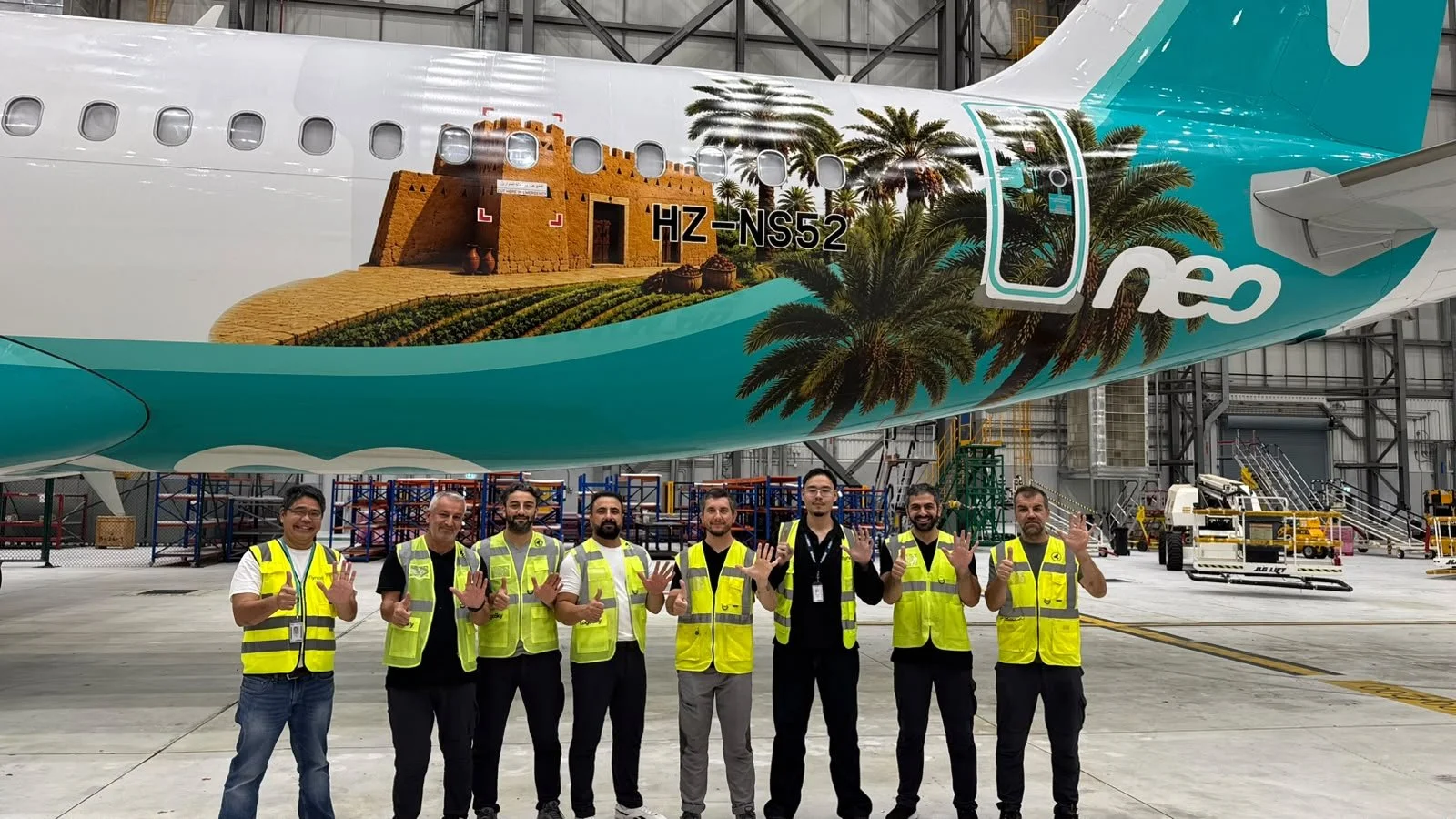
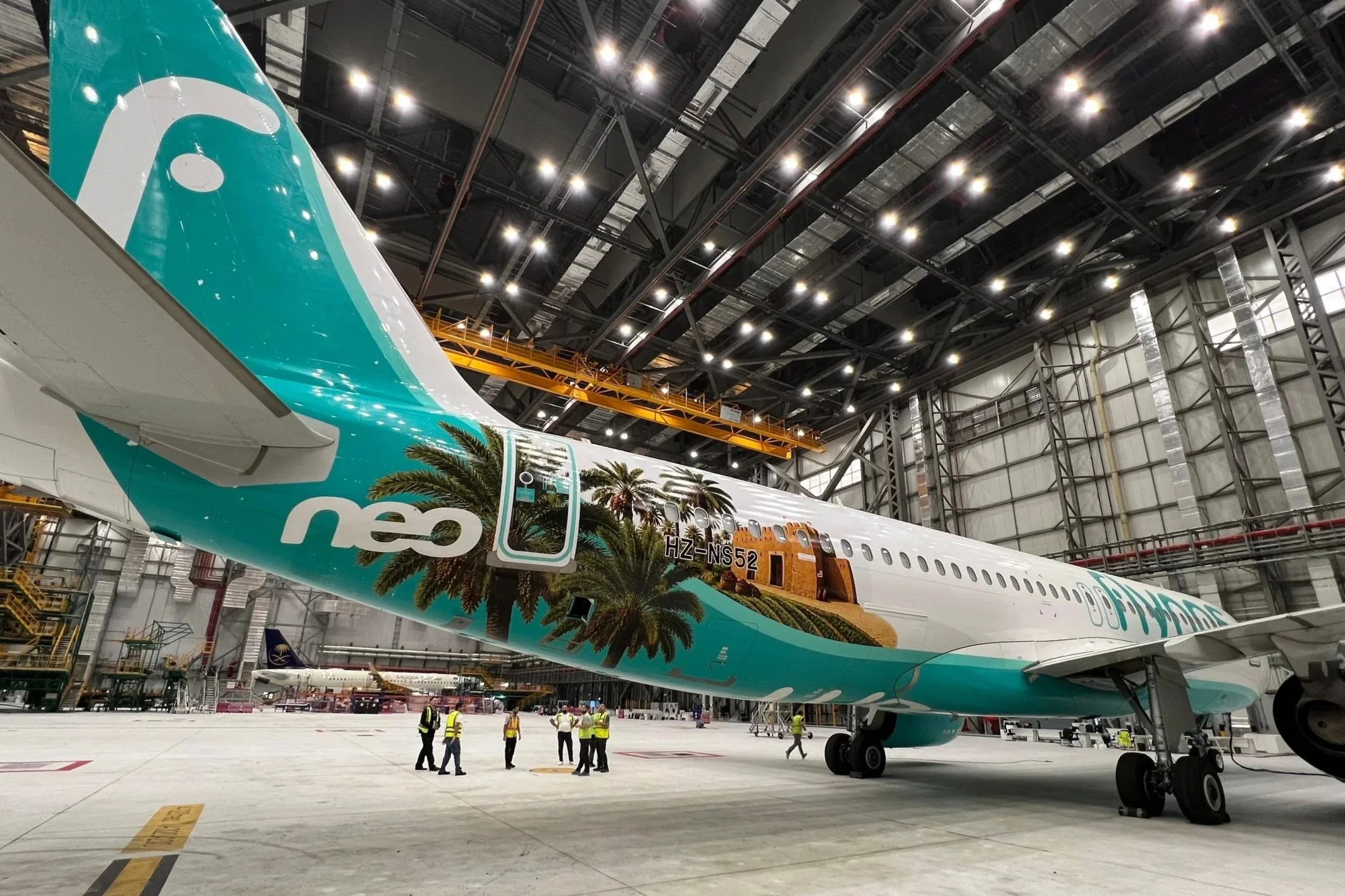
The Flynas special livery is a clear example of what that planning looks like in practice. Manufactured by LogoSky and installed by our experienced on-site team, this project was completed in a location far from our Istanbul production base, which meant the usual variables of aircraft livery work were joined by the added complexity of cross-border logistics. Materials, tooling and installation schedules all had to be coordinated with local teams before the first graphic could be positioned.
What stayed constant was the standard. From the first panel to the final inspection, every stage was managed with close attention to alignment, surface conditions and finishing quality, and documented in line with our EASA Part 21G approval the same certified process regardless of which country the installation takes place in. That consistency is the real test for any airline livery creator working internationally: wherever the aircraft is parked, the finished result has to meet the same benchmark it would in Istanbul. For Flynas, that meant a livery that reads as seamless from ten meters away and holds up to close inspection at arm's length the two standards a genuine aircraft livery maker is judged against.
Different Aircraft, One Standard: Siamwings Airways and Air Atlanta
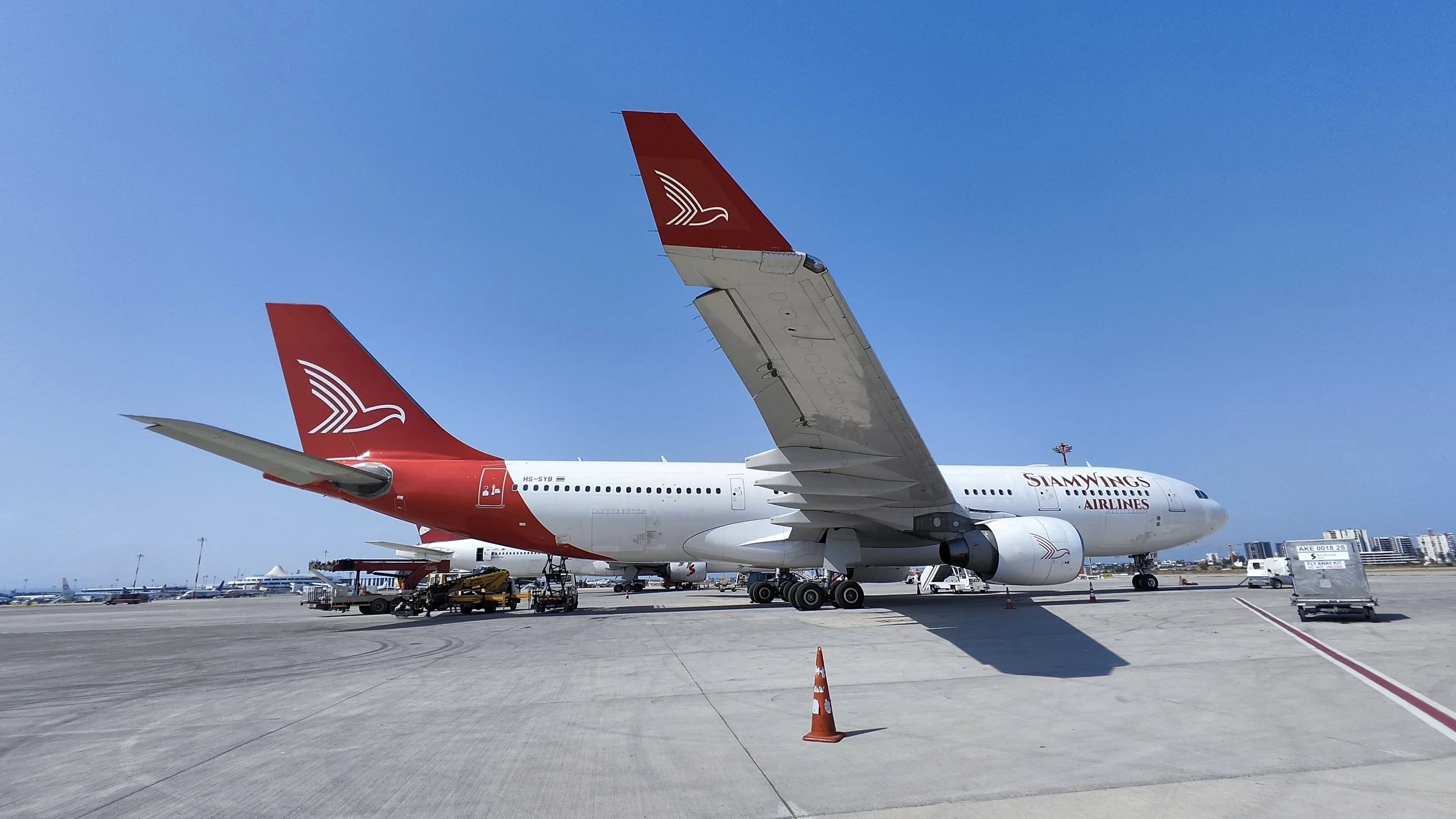
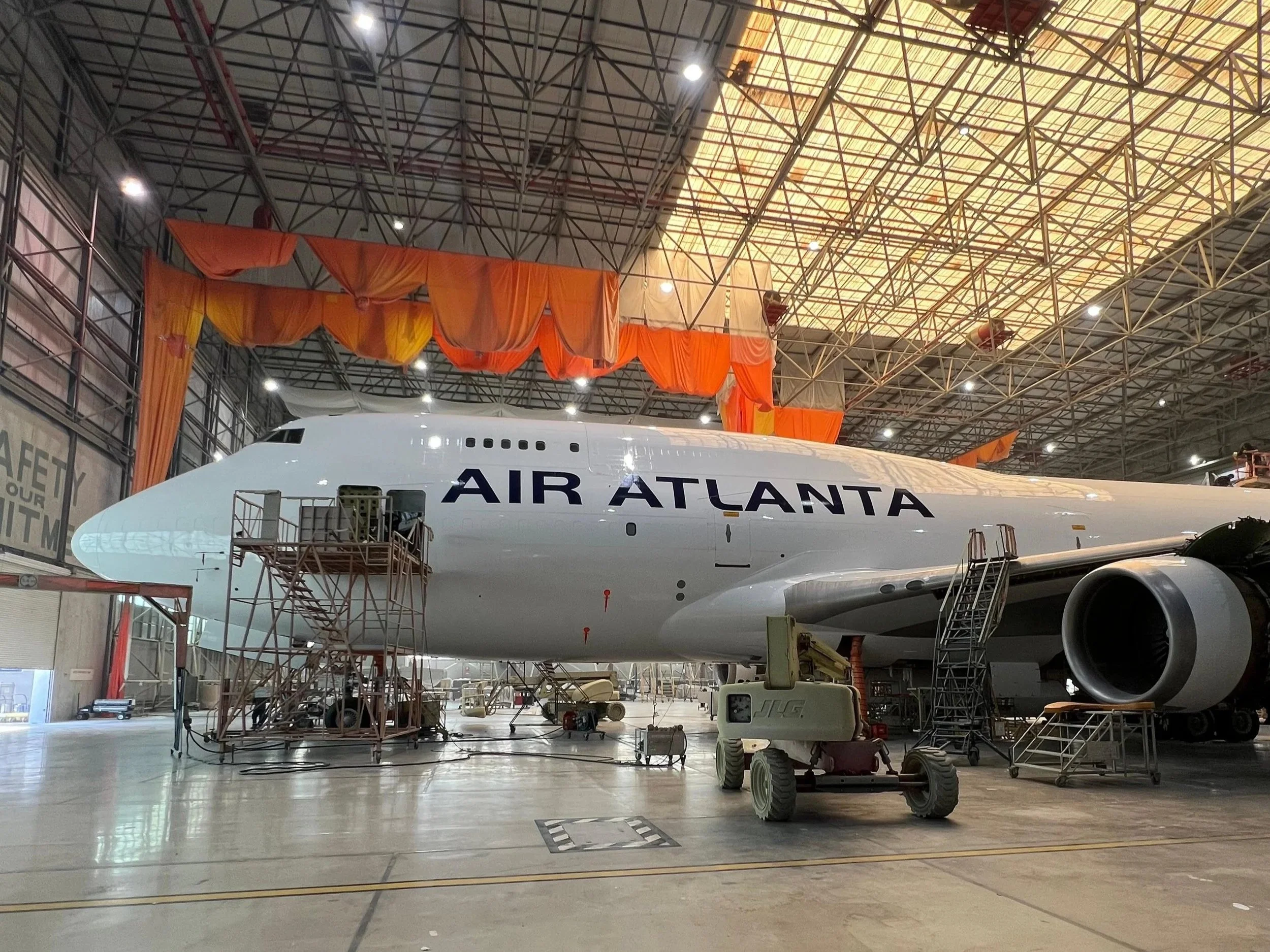
The second story from this period involved two aircraft with very little in common beyond the runway they shared: a Siamwings Airways widebody and an Air Atlanta aircraft, each with its own dimensions, surface geometry and installation conditions. While the Flynas project showed our ability to work across distances, these two projects demonstrated our ability to adapt across aircraft types within a tight production window.
LogoSky's approach to both projects combined controlled manufacturing in Istanbul with the judgment of an on-site installation team experienced enough to make real-time adjustments. The result, across two structurally different aircraft, was the same finish quality, the same positioning accuracy and the same visual consistency proof that a livery standard is only meaningful if it holds regardless of the aircraft in front of the team.
Why the Process Matters More
It's tempting to talk about aircraft livery work purely in terms of the finished image the colors, the tail art, the brand statement rolling down a runway. But the projects behind Flynas, Siamwings Airways and Air Atlanta point to something less visible and more important: the discipline of the process itself. Manufacturing aircraft decals in a controlled environment, then handing that work to an installation team capable of reading a surface and adjusting on site, is what separates a livery that photographs well from one that performs well over years of service, weather exposure and ground handling.
This is also why aircraft placards and markings are never treated as an afterthought at LogoSky. A livery and its placards are produced and inspected as a single system, not two separate jobs stitched together at the end, under the same EASA Part 21G approved manufacturing scope that covers our aircraft decals and placards work more broadly. Whether the scope is a full special livery, a set of aircraft placards, or an aviation placards refresh ahead of an inspection, the same planning sequence applies: measure the airframe, prepare the materials to match it, and install with a team that has done this before, in many countries on many aircraft types.
Looking Ahead
Flynas, Siamwings Airways and Air Atlanta represent three different starting points and the same finish line: an aircraft that leaves the hangar looking exactly as intended, with every graphic, decal and placard positioned to standard. As LogoSky continues to take on projects across new locations and aircraft types, that combination of Istanbul-based manufacturing paired with adaptable, experienced installation remains the constant. For airlines evaluating an aircraft livery maker or planning their next placard aviation project, these three projects are a useful reference point for what precision, wherever the aircraft is, actually looks like in practice.